
Canva Ad
Productivity ads usually play it safe, showing a professional at a laptop getting a task done faster. Canva went the other way and built its latest ad around an opera-singing squirrel. We asked HMM AI whether that strategy will pay off.
Global beauty giants are currently locked in a race over active ingredients, filling our screens with complex breakdowns of niacinamide and hyaluronic acid percentages and multi-step acne routines that can feel more like a chemistry lesson than a self-care ritual.
But is this approach actually making ads more effective, or is it exhausting the average consumer? The answer is likely the latter.
When we analyzed last month’s performance metrics across major Indian skincare campaigns, the takeaway was clear: focusing too much on the science of skincare versus the end benefits can actually backfire. While influencer-led ads for elaborate acne routines saw some movement, they failed to fully resonate with consumers.
Instead, the brands that quietly dominated were the ones that not only focused on consumer needs, but also tapped into a simple, daily need for Indian consumers: protection from the sun. The winning creatives focused on providing sun protection while preserving the skin’s natural glow, rather than trying to build the product up by focusing on its ingredients.
At Human Made Machine, we help you understand whether your creative will be effective with your target audience. This is crucial, since creatives contribute up to 70% of a campaign’s success. We test thousands of ads each month in realistic, simulated media environments. Our tests use the gold standard of control and exposed experiments to predict real-world impact.
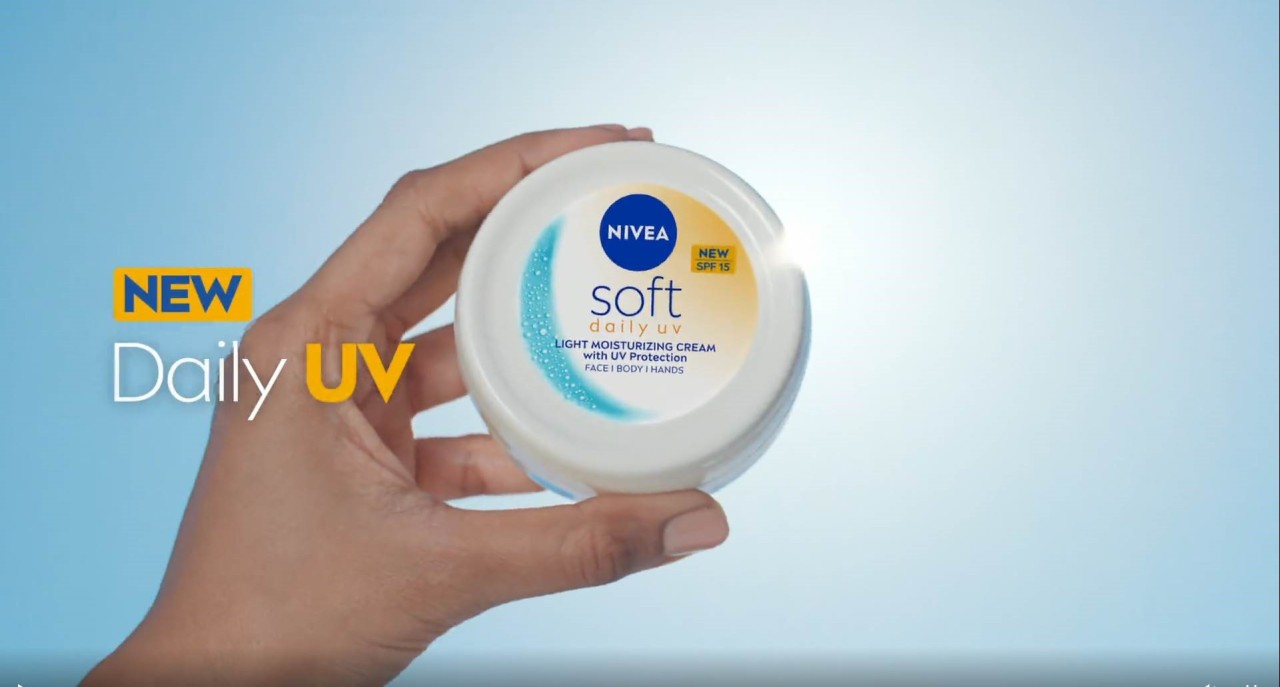
Nivea secured the top spot by bypassing complex formulations and directly addressing the consumers’ daily need for sun protection, a benefit implied in the product name itself.
Its performance was anchored by a particularly high Appeal score, supported by solid Understandability and Product Appeal diagnostics, both of which gave it an edge over other creatives.
This creative leaned into themes of youth and sunshine, showing young people in outdoor settings, and highlighted concrete benefits like 88% UV protection and hydration (emphasized by the product name's 'Soft'). The tagline, 'Sunproof your Campus Glow,' further reinforced the promise of protecting a youthful, glowing appearance. All of these things were easy for consumers to wrap their heads around, and see it as a product that would be for them.
This was echoed in the comments, where people said they liked the simplicity and the ad felt the ad didn’t over promise what it could do.
Pond’s focused on similar psychology. They offered an unambiguous promise: “instant brightness”, showing a model easily pulling the small container out of her handbag on the way to an event. This ease of use combined with the benefit of skin brightness (listed in the name of the product itself which was repeated in the ad) achieved significant lift in purchase intent.
“I like the glowiness of the skin from using the Pond's product.”
Garnier further confirmed our hypothesis around the consumer desire for clear skin undamaged by the sun. By leaning into how the SPF product protects you from “dryness” and “tanning” while cooling you down with a smooth, non-sticky formula, they drove favorability towards the brand.
“I like the Garnier sunscreen ad; it clearly provides SPF protection and a lightweight and non-sticky formula.”
In a month saturated with heavy claims and visuals of models enjoying the sunshine, the simplest messages were the ones that broke through. Successful ads focused on consumer needs, both in terms of ease of use and the end result, rather than focusing exclusively on product formulas.
Hats off to Nivea and Pond’s for mastering the art of the simple sell. Sometimes, the best science is the kind consumers don't have to study.
Want to learn more about how to maximize the return on your ad spend with effective creative? Connect with us and request a demo.

Productivity ads usually play it safe, showing a professional at a laptop getting a task done faster. Canva went the other way and built its latest ad around an opera-singing squirrel. We asked HMM AI whether that strategy will pay off.

Skincare ads reliably use two devices: a famous face, or a lab-style demo of the product at work. This month, testing Thai skincare TV against women aged 18–55, both were in full force — and the ad that won wasn't decided by which trick it used, but by how convincingly it pulled it off.

Celebrity wattage usually wins fragrance ads. Not this time. We tested 11 Turkish fragrance creatives this month, and the ad that beat Emma Watson and Kendall Jenner used no celebrity at all.