The Three Wise Themes of Christmas ads
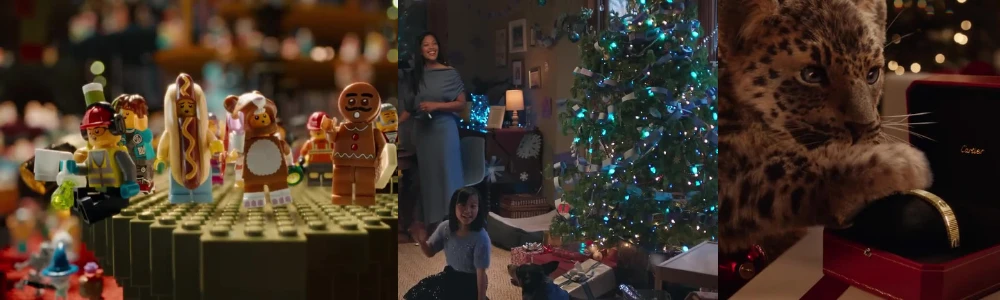
The holiday season is the most wonderful (and most ruthlessly competitive) time of the year for advertisers. With at least 86% of consumers planning to buy gifts, the economic stakes are huge.
A Christmas ad must transcend the transactional. The most successful campaigns, boost visibility, forge deep emotional connections and create lasting brand associations. They do this by leveraging core festive values: togetherness, nostalgia, and giving. This is storytelling engineered to make your brand memorable long after the tinsel is packed away.
At Human Made Machine, we help you understand whether your creative will actually be effective with your target audience. We evaluated this season's festive ads across distinct approaches - family themes, luxury, and humor - analyzing feedback from thousands of people in the US to draw out patterns of strong performance for each approach, and, crucially, the elements that evoke warmth, nostalgia, and joy.
The Blueprint for Festive Success
Our analysis revealed three fundamental audience expectations that anchor Christmas ads, regardless of whether the creative strategy targets a belly laugh or high-end glamour. Missing any element risks the ad feeling off‑season or irrelevant:
- Overt, traditional Christmas imagery: Audiences want unmistakable seasonal cues - snow, trees, and classic holiday colors. When visuals are too subtle, viewers often dismiss the spot as unrelated to the holiday context.
- Human connection through gifting or shared experience: The narrative should center on giving or sharing joy, integrating the product seamlessly into a story of togetherness.
- Unmistakably uplifting tone: Warmth, happiness, joy, and nostalgia are the core emotional currencies. Dull or cynical tones clash directly with audience expectations, weakening impact.
Of the three creative approaches we analyzed, humor emerged as the riskiest path. When we explored audience feedback on whether ads aligned with seasonal expectations, the data revealed that humor-themed ads had a 27% explicit mismatch rate with Christmas ad expectations - far higher than luxury at 19% or family at 11%. That doesn’t mean humor can’t work, but it’s the most subjective route and demands extra care to stay on‑theme.
Spotlight on the Winners: How Different Approaches Landed
Our analysis of thousands of creative experiments shows that top-tier ads excel across three diagnostic pillars: Breakthrough (capturing and retaining attention), Appeal (highlighting what’s relevant and compelling about the product), and Brand Engagement (building meaningful brand connections). The following top performers demonstrate how meeting core audience expectations drives results across diverse creative approaches.
The Family-Focused Approach: Crayola - Blue Christmas
Testing a set of family-focused ads from Crayola, Carter's, John Lewis, and Brach's, Crayola's "Blue Christmas" emerged as the winner for this creative approach, outperforming other festive ads tested, across all key pillars.
The ad scored outstanding Breakthrough (8/10), Appeal (8/10) and Brand Engagement (6/10), placing it in the top 5% of our US benchmarks and highlighting its strong enjoyability and attention-grabbing impact.
It told a simple, heartfelt story focused on a child's empathy and kindness toward a beloved pet. This narrative, evoking innocence and creativity, wove classic family values seamlessly into the spirit of giving and togetherness. When asked how the ad made them feel, viewers chose 'Joy' more frequently than for any other ad in the study.
Family storytelling, when authentic and centered on small moments of care, delivers broad appeal and deep emotional resonance, as reflected by the audience:
I thought it was very sweet. It was sentimental without being cheesy or overly dramatic. Crayola is such a familiar brand, and this feels like a fresh approach to the idea of color.
It was very heartwarming, it makes you smile.
It's not boisterous. A small, meaningful message that leaves you smiling.
The Humor Approach: Lego - Hello! Is it play you’re looking for?
In the humor category, we looked at Lego, San Pellegrino, Apple, and Amazon. Lego's "Hello! Is it play you’re looking for" secured the top spot.
The ad also scored strongly across metrics: Breakthrough (8/10), Appeal (7/10) and Brand Engagement (6/10), putting it in the top 10% of our US benchmarks.
It used a whimsical, animated "Lego movie-esque" style with a fun play on the iconic Lionel Ritchie song, "Hello". The narrative positioned the product as the solution to screen distraction, guiding a child to rediscover his love for play. Viewers responded positively to the lively characters, creativity, and the upbeat message:
I liked the ad due to the Lego characters coming alive. Great story line.
I just like the fact it's targeting children and challenging them to get off the phone, actually engage and be creative in making something.
I like all the different characters and brands, the song, the creativity and reminding kids to play.
Humor can shine in the seasonal context when it’s genuinely original and inspiring. Satirical or abstract approaches can backfire if they create confusion, as seen with Amazon’s “Five Star Theatre,” which scored low on Understandability, and San Pellegrino’s “Holiday on Italian Time,” which generated significantly higher levels of viewer irritation than other humor-led ads.
The Luxury Approach: Cartier - A Magical Night
We tested festive ads from Cartier, Chanel, Dior, and Burberry, with Cartier’s "A Magical Night" emerging as the strongest performer in the luxury set.
The ad generated a potent blend of joy and surprise - the dominant emotions identified by viewers, fueling the ad’s overall resonance and further powered its excellent Breakthrough (8/10), on top of its stellar Appeal (7/10) and Brand Engagement (6/10) performance, ranking among the top 30% of our US benchmarks.
Cartier masterfully blended aspirational aesthetics with festive whimsy. The creative featured clear, simple storytelling involving cute, cheeky panthers (a clear distinctive brand cue for Cartier) that seamlessly wove the product into a magical, cinematic narrative, with the whimsical score serving as the critical element that elevated the magic and mystery.
Consumer feedback highlighted the fresh and fun way the product was showcased:
It was fun to watch because of the animals and it also made the jewelry look shiny and desirable.
From beginning to end, surprises and a satisfying ending with smiles on the face of the salesman in the ad.
I enjoy how the production team decided to get creative with getting attention on their jewelry. Using wild animals as criminals to steal their jewelry is intriguing.
In contrast, Chanel’s "Winter Constellation" lacked narrative clarity. Abstract visuals overshadowed the product, creating viewer friction and a weak emotional hook. As a result, this spot triggered "Boredom" more than any other ad in our study, showing that relying solely on glamorous visuals to convey gifting, without a clear story, can miss the mark.
Ultimately, luxury ads can achieve mass resonance when refined visual polish is balanced with warmth, surprise, and a clearly defined festive context.
Creative Considerations for Future Festive Success
Beyond creative resonance, future success relies on two strategic anchors: Brand Platform and Channel Mix.
When asked about favorite festive ads, Coca-Cola was the top-mentioned brand due to its multi-year commitment to iconic imagery; maintaining a consistent tone year-on-year transforms a brand into a seasonal tradition that audiences expect and recognize.
Additionally, ensure the media plan includes long-form channels (e.g., cinema or streaming) to capture deep attention and give the story the runway to build equity. Reinforce this with channel-optimized, shorter-cuts (especially product-led social assets) to drive consideration and purchase intent.
In summary, the most effective festive ads pair unmistakable Christmas cues with a narrative of joy. By leveraging repetition and strategic channel placement, you can transform a one-off holiday spot into a recurring seasonal tradition with long-lasting brand impact.
Want to learn more about how to maximize the return on your ad spend with effective creative? Connect with us and request a demo.