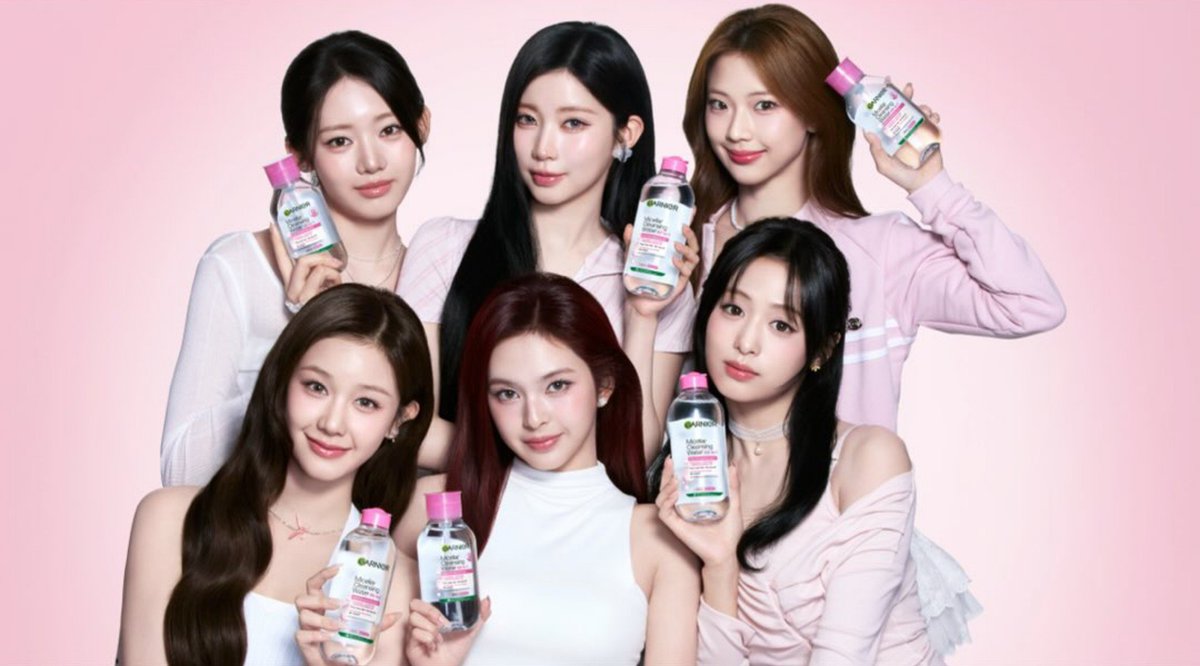

Ad of the month - Garnier

We frequently observe two reliable devices in skin care advertising: hire a famous face, or run a lab-style demonstration of what the product does to skin. This month we tested skincare ads airing on Thai TV — from Garnier and Nivea to L’Oréal and Pond’s — against a female audience aged 18–55, and both approaches were well represented. The difference between the ad that won and the rest wasn’t necessarily which storytelling device they reached for. It was how convincingly they used it.
At Human Made Machine, we help you understand whether your creative will be effective with your target audience. This is crucial, since creative contributes up to 70% of a campaign’s success. We test thousands of ads each month in realistic, simulated media environments, using the gold standard of control and exposed experiments to predict real-world impact.
The Winner: Garnier – Micellar
The ad hands the mic to K-pop group BABYMONSTER. Members take turns voicing the same frustration — harsh wipes that leave sensitive skin irritated — before one confidently proclaims: “Not mine.” We see the band members using the wipes, and an animated sequence showing the “Micro Micelle” technology lifting away makeup, dirt and sunscreen. There are plenty of shots of the celebrities, individually and together, skin glowing, and the group closes with a joint testimonial: “It’s the best cleanser we’ve ever used. By Garnier!”. The final frames have a strong, personalised written endorsement: ‘BABYMONSTER LOVES GARNIER’, with the BABYMONSTER and Garnier branding cleverly combined.
What often determines whether a celebrity ad works is where the talent sits in the story. BABYMONSTER aren’t spokespeople just delivering lines over the product demo — they’re people with relatable skin complaints, who find the fix together. Their presence makes sense to people; the ad scored 90% on Talent Fit, and 81% on Talent Appeal. At 51 seconds, the ad could have easily lost viewer interest, but instead it packs in content that adds value to the story throughout.
Particularly impressive was the ad’s score on Appeal, our measure of how well received an ad’s rational messaging is. This can often suffer when an enjoyable celebrity feature takes the spotlight, but not in this case. In fact, the ad registered a 10/10 score, beating all the other assets we tested. The clear, practical endorsement led viewers to find the product strongly appealing and relevant, while rating the messaging as highly credible and understandable.
Feedback from real people shows how successfully the pop group drove the message:
"I like the product presentation, which shows how to use it. Having BABYMONSTER as an ambassador helps represent the product even better; their image suits the brand." (18–24, female)
"I like the attention to detail in the use of bright and soft colours, perfect for BABYMONSTER." (35–44, female)
"The set design is clean and suitable for presenting facial cleansing products. The presenters were also well-chosen — being young and part of a girl group that needs to take special care of their own skin — which projects credibility." (18–24, female)
It’s worth noting that fandom wasn’t doing all the work. Several viewers praised the group as ambassadors without necessarily saying they were fans themselves — “I like it because they bring in artists to help promote the products” — while others read the casting as a deliberate positioning move: “The brand’s use of K Pop artists is a way to open up another market segment.” A minority pushed back on relevance grounds, questioning why a Korean group was fronting a Thai skincare brand — a reminder that celebrities are never universally well received, and brands need to make sure the wider messaging in their celebrity ads rings true.
Runner-up: Nivea – Luminous Antispot
Nivea’s ad opens with a problem, rather than celebrities. In its 15 seconds run time, on-screen text calls out dark spots, sun spots and acne scars, before a cellular-level animation shows dark pigment being cleared from the skin, then a before-and-after split screen — visible blemishes on one side, clear skin on the other — backed by a specific, time-bound claim: results in two weeks.
This ad, which drove an 8ppt lift in Consideration, does not rely on celebrities to hold attention: it leans entirely on making a credible, easy to understand claim, fast. Credibility landed at 88% and Understandability at 93%, while Persuasion reached 88%. A top-tier, easy-to-digest demonstration, it turns out, can boost the brand nearly as well as well-cast celebrities.
Our winner and our runner-up show two different routes to strong brand lift. Garnier’s celebrity casting worked because BABYMONSTER were written into the ad as fellow sufferers of the audience’s own skin problem, lending the brand their star power while building relevance. Nivea’s demonstration worked because the proof was specific, understandable, and credible. Both brands deserve credit for succeeding, but in our view Garnier deserves the win for tackling the thorny challenge of celebrity advertising, and giving a masterclass in how to reap the rewards.
Want to learn more about how to maximise the return on your ad spend with effective creative? Connect with us and request a demo.